Dear marketers - create adjacent value
I always knew the fundamentals. But now I can also do the computing.

Customer segmentation is too important to mess it up with flabby thinking.

Segmentation is one of the fundamentals of marketing. Almost every piece of strategic work starts by deciding who we’re for, and that means deciding that some groups of buyers differ from others enough to pause and think about how to target each. Few argue with that.
Yet flabby thinking could lead to very serious mistakes. I’ve been in meetings where business consultants have produced very polished presentations showing why we should ignore some segments, and double down on others. But segment differences need to be significant to be useful. And you need to be able to target them with different product variants, media, messaging. Otherwise it is just theory.
Because segmentation is so engrained into how we learn about marketing, we can fall into the trap of looking for differences that don’t exist. If you start out already committed to finding differences, I guarantee you’ll find them.
If we start assuming we have segments, we build our surveys to separate people, we build the charts to show the separation, and by the time the final deck exists we’ve already committed to the answer. This is hedgehog thinking.
A fictional example to demonstrate
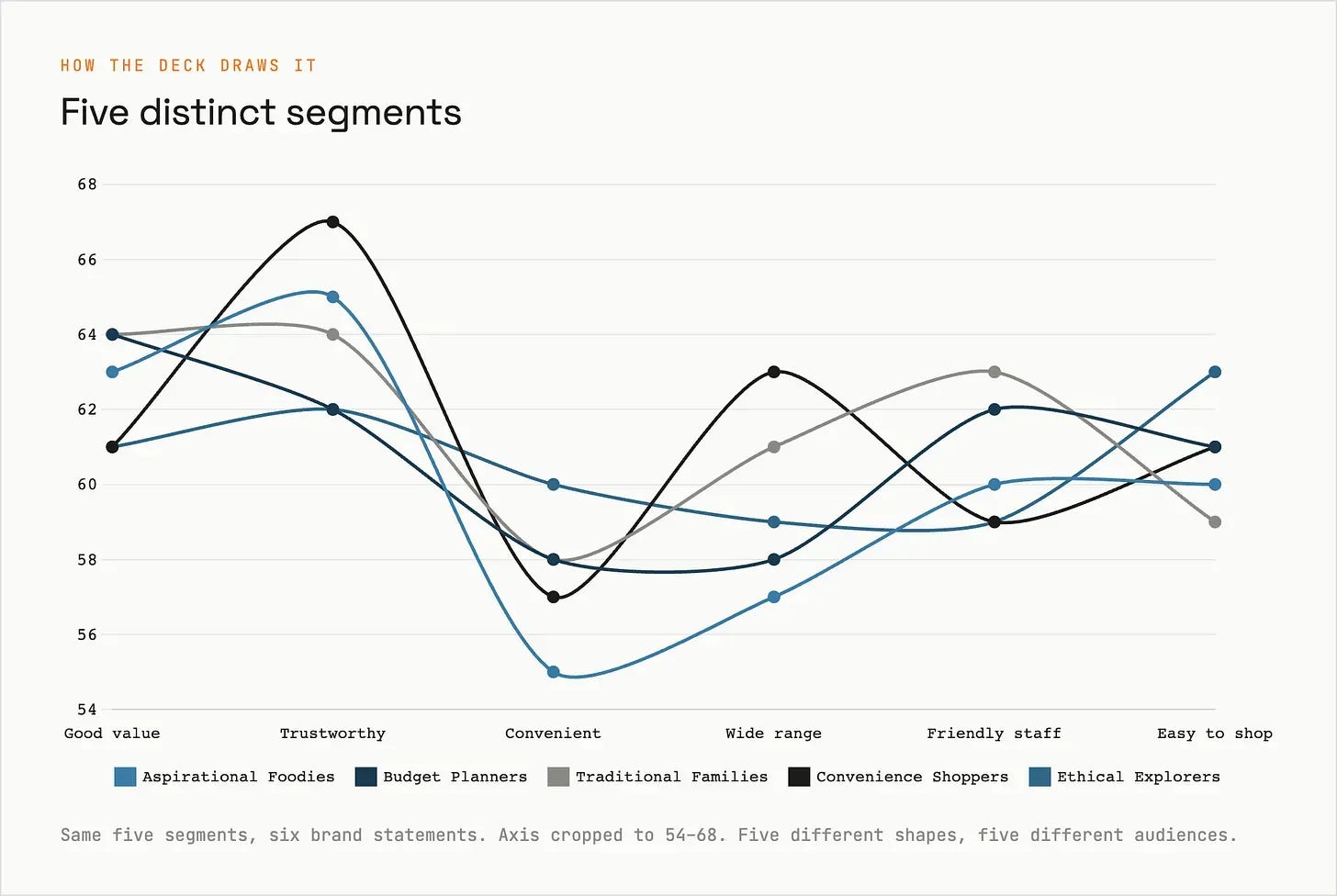
Look at the chart. At first glance, we have five customer segments scored on six typical brand statements. We can see some serious differences here. Five distinct segments. Five different shapes, five different audiences. Some people think the brand has wider range of products that others. Some trust it more. Some find it less easy to buy.
Great, so this gives the starting point on how to succeed with each segment if we want. Or at the very least, design our plans to target these different groups.
Except maybe we don’t. Here is the same data, with a proper axis. Axis at 0-100. The spread was three or four points all along. So we don’t have five segments based on this data. We have one.
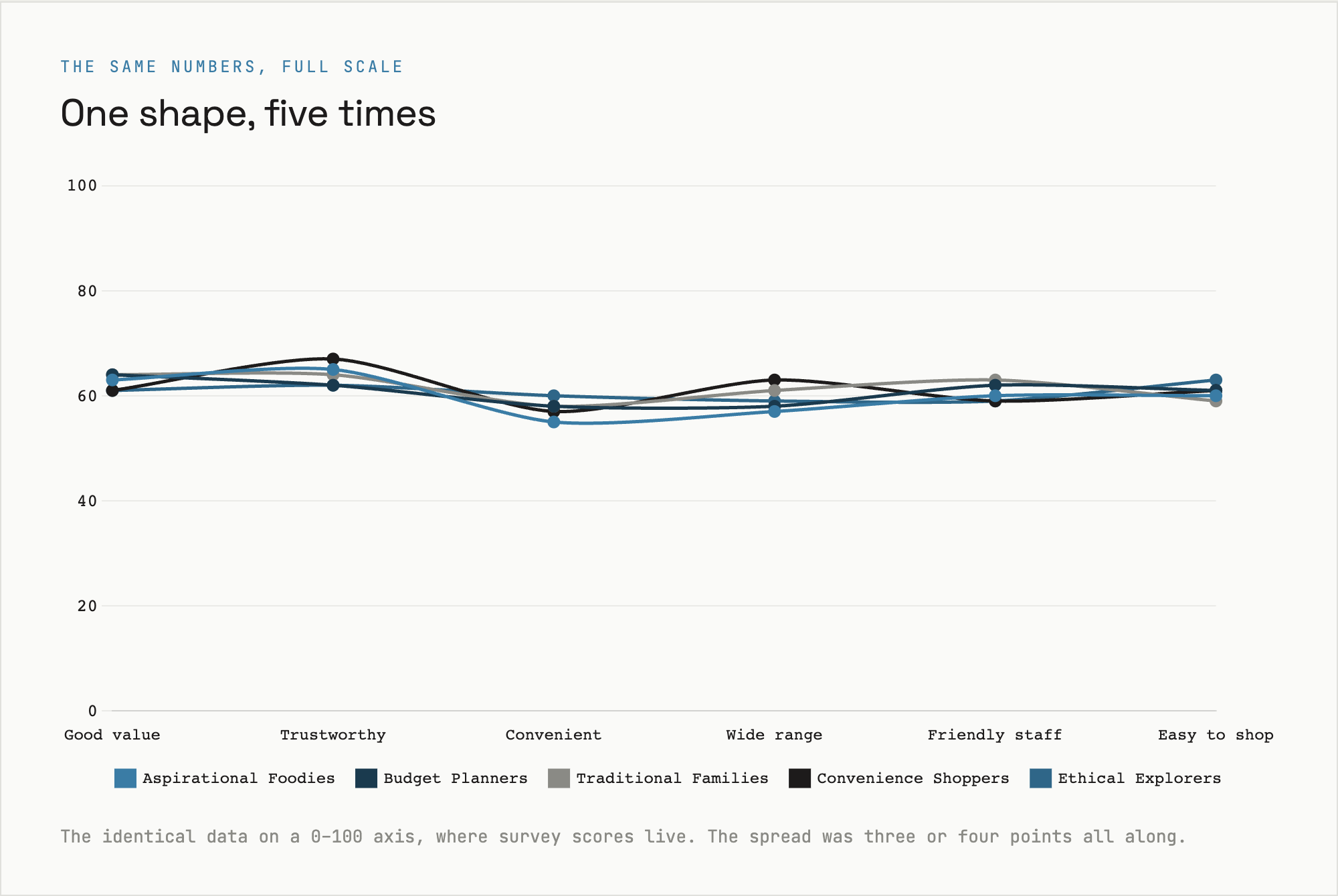
We draw differences because we went looking for them. Crop the axis, index the scores to 100, show one segment per page so nobody overlays them, and four points of noise becomes a finding. Every chart is accurate. The framing is the trick.
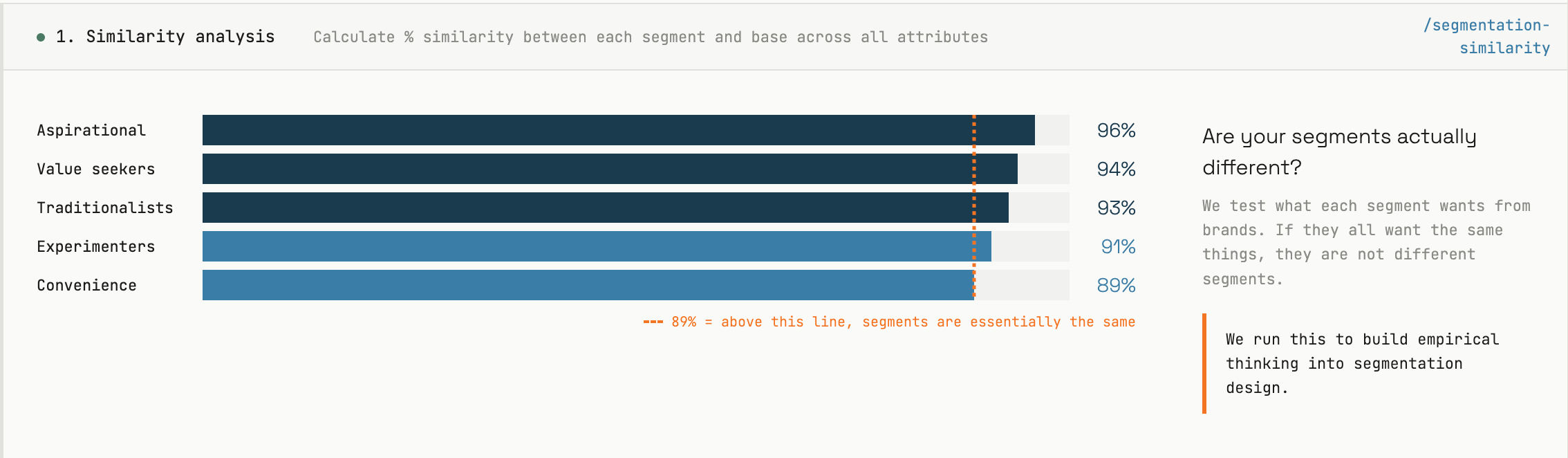
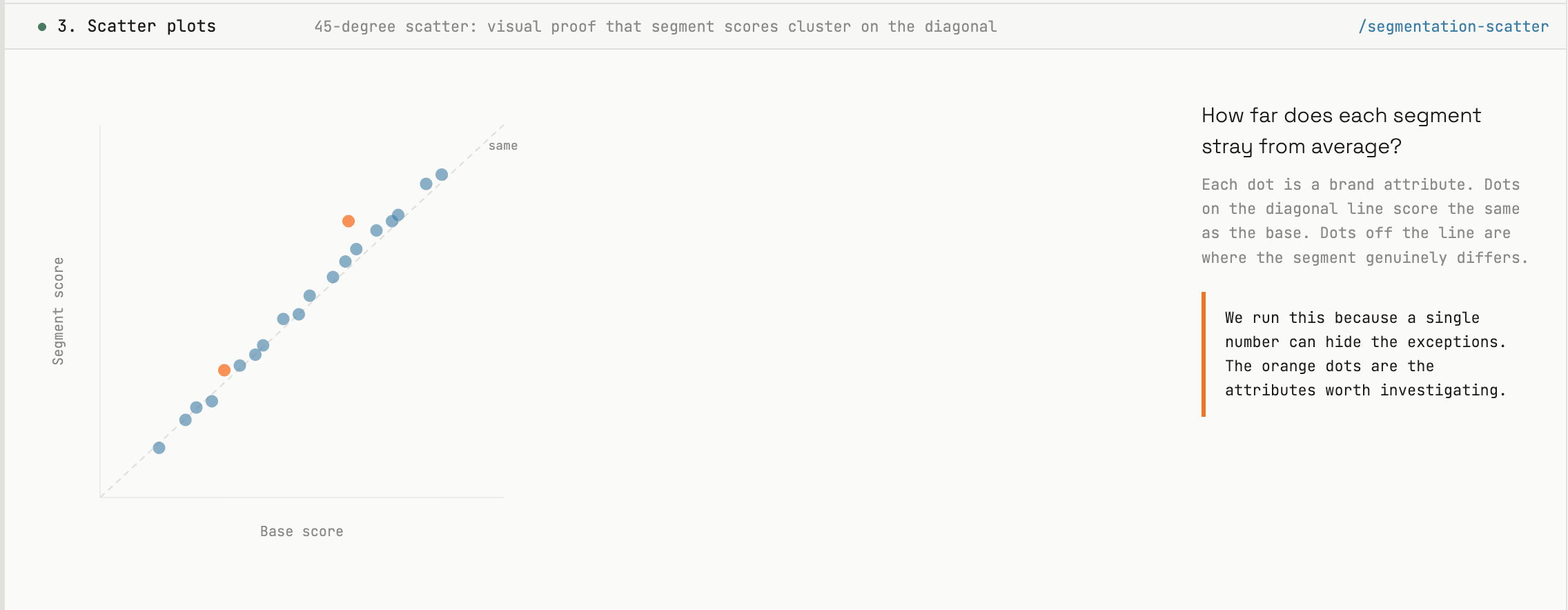
This fix is almost embarrassingly simple. Take a segment, and for every statement, measure the gap to the average shopper and drop the sign, so a plus five and a minus five both just count as five. Average those gaps across all the statements. Subtract from 100. That’s the segment’s similarity. A group sitting three points off the average on a typical statement comes out 97% similar.
The averaging is the important bit. One dramatic statement now has to share the average with every statement where the group is identical to everyone else. The cropped-axis chart let one spike speak for the segment. This won’t.
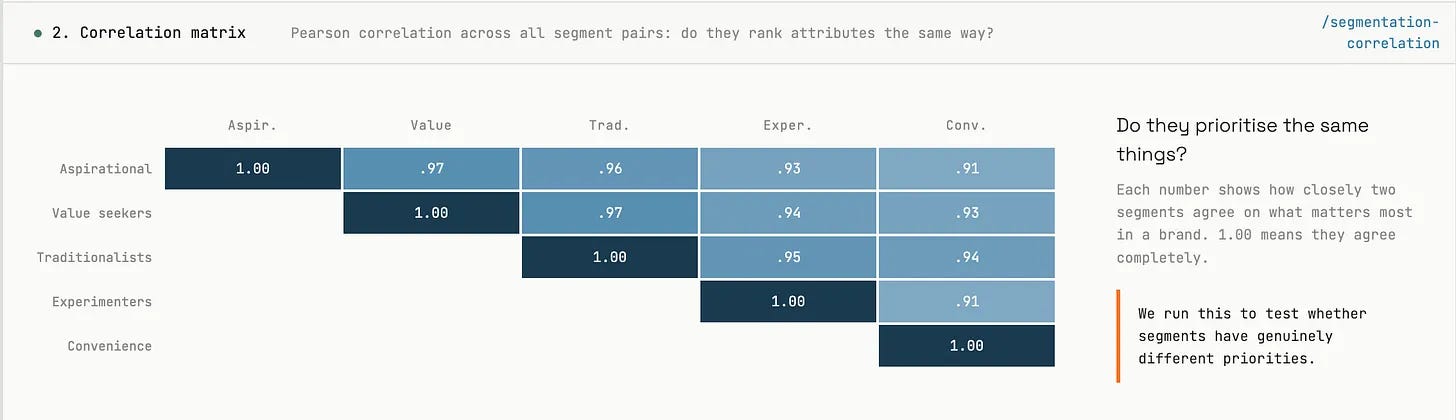
Andrew Ehrenberg found that brand buyers differ by under two points on average across dozens of categories. So the rule of thumb: clear 89% similarity and you are looking at one audience, not several.
Here’s the part that’s new, and the reason I’m writing this.
Segmentation matters, but pseudo-science segmentation is dangerous. And the maths that tells them apart has been around for decades. I’ve known about since I first started studying the work of Ehrenberg-Bass 15 years ago.
But knowing it was never the bottleneck. Doing it was. Running the sums properly, every time, used to mean a specialist, which meant time and money, which meant the check got skipped unless someone was pedantic enough to insist. I am. But pedantry doesn’t scale.
But if you know the fundamentals, you can use AI to do the computing. Some of the segmentation checks I built are below to see if the data shows if we really have differences in our segments.
And correlations checks to see how closely segments agree (not differ).
And how far away from average is each segment.
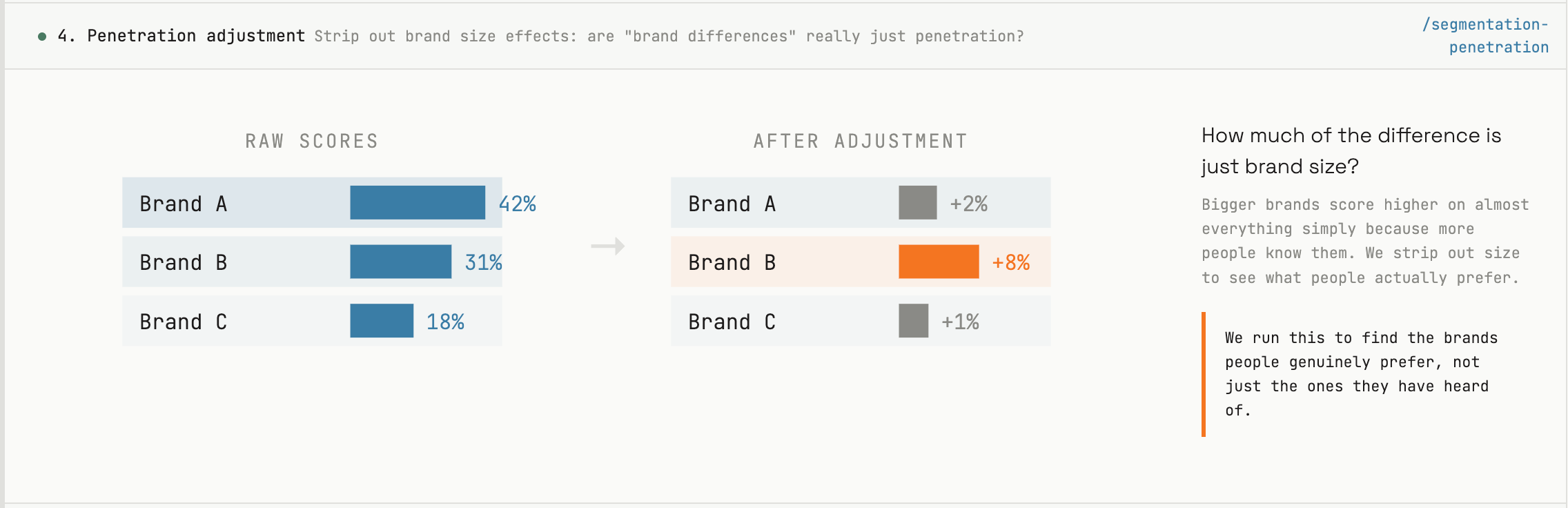
And how much of the differences are due to the brand size affect.
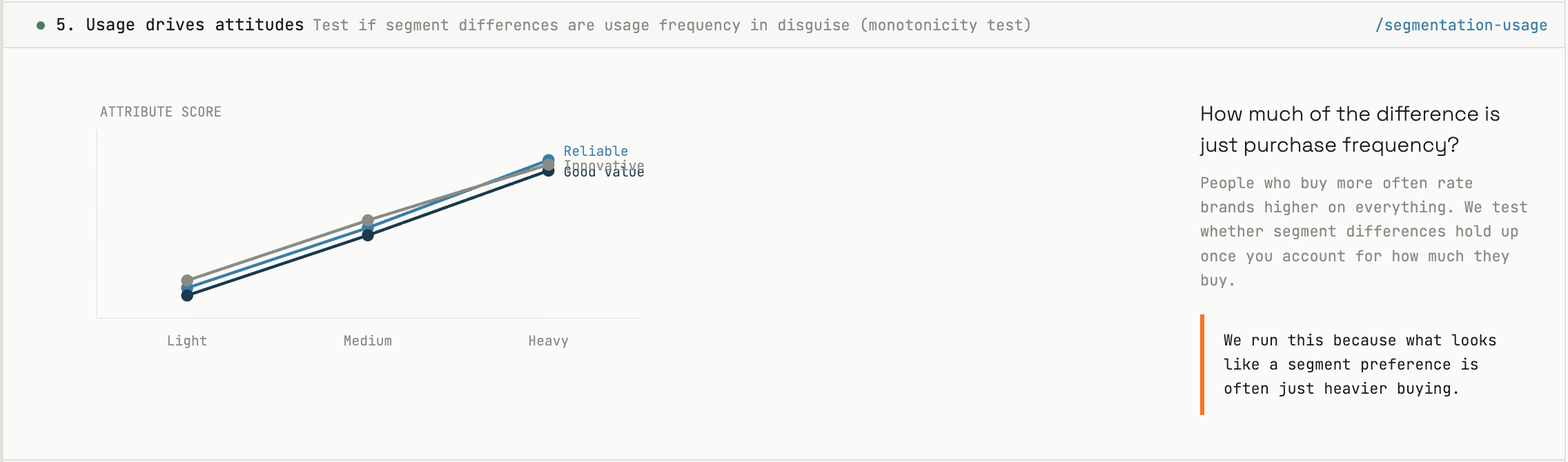
And how much of the differences is just due to purchase frequency - those they buy more generally say nicer things about the brand.
My point is this. Don’t settle for having deep knowledge. Combine your knowledge with AI to build things that create adjacent value.